Don't miss our holiday offer - up to 50% OFF!

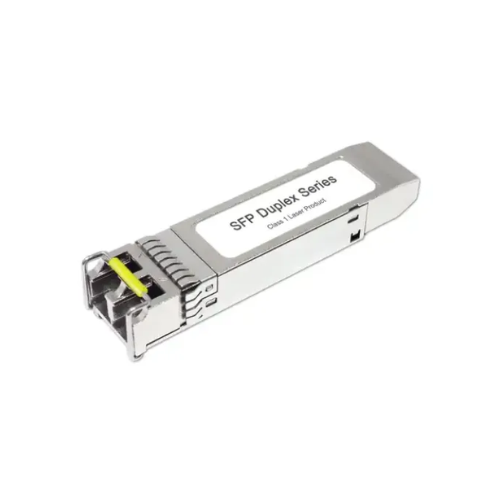
Ficer FSFP-C7-S13-20D LC Duplex SFP Transceiver
$ 14.60
Ficer FSFP-C7-S13-20D LC Duplex SFP Transceiver — Reliable 20km Single-Mode Gigabit Fiber for Serious Network InfrastructureWhen you’re building fiber optic links that need to span buildings, campuses, or urban distribution zones — and reliability over distance is the primary requirement — the transceiver you choose matters more than most network engineers initially appreciate. A module that meets spec on paper but uses a poorly binned laser or inconsistent optical components will give you marginal receive power levels, frequent link drops in warm weather, and a troubleshooting nightmare that costs far more in engineering hours than the price difference between a quality transceiver and a budget one ever justified.Ficer FSFP-C7-S13-20D LC Duplex SFP Transceiver is built for network professionals in Bangladesh who need dependable 20-kilometer single-mode fiber connectivity without the premium pricing of tier-one OEM modules. It is a 1000BASE-LX standard SFP transceiver operating at a 1310nm wavelength over standard single-mode fiber with an LC duplex connector interface — the most widely deployed fiber connector type in Bangladesh’s commercial, institutional, and ISP infrastructure ecosystem.Decoding the model number tells you everything about what this module does. The “S13” designation confirms single-mode operation at 1310nm — the wavelength used for extended-reach single-mode fiber links where the fiber’s chromatic dispersion characteristics at this wavelength are well understood and well controlled. The “20D” suffix specifies 20 kilometers of maximum reach and duplex operation — meaning it uses two fiber strands in the conventional LC duplex configuration, one for transmit and one for receive, establishing a full-duplex Gigabit link across the full 20km span. This is a conventional 1000BASE-LX architecture, not a bi-directional WDM design, which means both ends of the link use identical modules — simplifying procurement, stock management, and field replacement significantly.That 20km reach is the defining capability that makes this module relevant to a specific and important set of use cases in Bangladesh’s network infrastructure landscape. For ISPs running fiber distribution from a central exchange point to remote aggregation nodes across Dhaka’s metropolitan area, 20km covers most urban span distances comfortably without requiring optical amplification. For enterprise network teams interconnecting geographically separated campus buildings — a university with multiple faculties spread across a city, a hospital group with satellite clinics, a government agency with district offices — 20km single-mode fiber links provide the bandwidth headroom and distance coverage that copper and multimode fiber simply cannot match.LC duplex connector interface is the practical standard for SFP fiber modules in the current market. LC connectors are compact, low-insertion-loss, and available everywhere in Bangladesh’s fiber accessories supply chain — from pre-terminated LC-LC duplex patch leads to LC adapter panels and fiber distribution frames. Terminating and patching LC duplex connections is a skill every fiber technician in the country already has, which means the FSFP-C7-S13-20D integrates into existing fiber infrastructure workflows without introducing new tooling or training requirements.Operating on the standard 3.3V SFP power rail, the module fits into any MSA-compliant SFP cage across a wide range of switch and router brands commonly deployed in Bangladesh — including TP-Link, Cisco, Huawei, MikroTik, Ubiquiti, and D-Link equipment. The hot-pluggable SFP form factor allows the module to be installed or replaced on a live switch without powering down the host device, protecting network uptime during planned maintenance and emergency module replacements on production links. The metallic SFP enclosure provides EMI shielding that keeps the optical receiver circuitry protected from interference in the dense equipment rooms and ISP rack environments where this module is most commonly deployed.For network integrators, ISP infrastructure teams, enterprise IT departments, and structured cabling contractors across Bangladesh who are specifying or deploying 20km single-mode fiber links — and who need a competitively priced, professionally capable transceiver that performs consistently in Bangladesh’s real-world operating temperature conditions — the Ficer FSFP-C7-S13-20D delivers the reach, reliability, and compatibility that the job demands.Ficer FSFP-C7-S13-20D SpecificationsSpecificationDetailsBrandFicerModelFSFP-C7-S13-20DProduct Type1000BASE-LX LC Duplex SFP TransceiverFiber ModeSingle-Mode Fiber (SMF)Transmission TypeDuplex (Two Fiber Strands — TX RX)TX Wavelength1310 nmRX Wavelength1310 nmData Rate1.25 Gbps (Gigabit Ethernet)Network StandardIEEE 802.3 1000BASE-LXMaximum ReachUp to 20 km over Single-Mode FiberConnector TypeLC DuplexSFP MSA ComplianceYes — Multi-Source Agreement StandardHot-PluggableYesTX Disable FunctionSupportedLoss of Signal (LOS)SupportedSupply Voltage3.3V DCOperating Temperature0°C to 70°C (Commercial Grade)Storage Temperature-40°C to 85°CEnclosure MaterialMetallic (Low EMI)Compatible VendorsTP-Link, Cisco, Huawei, MikroTik, Ubiquiti, D-Link, NetgearCompatible Fiber CableOS1 / OS2 Single-Mode Fiber (9/125 µm)RoHS CompliantYesApplicationISP backbone, campus inter-building links, enterprise fiber uplinks, MANRead MoreWhy You Buy Ficer FSFP-C7-S13-20D LC Duplex SFP Transceiver20km Single-Mode Reach Covers Every Practical ISP and Enterprise Fiber Span in Bangladesh Without Amplification — The vast majority of fiber link distances in Bangladesh’s urban ISP distribution networks, university campus backbone deployments, and enterprise inter-building connections fall well within the 20km operating range of the FSFP-C7-S13-20D — meaning network planners can design and deploy these links without budgeting for optical amplifiers, regeneration nodes, or any intermediate active equipment along the fiber span. That architectural simplicity directly reduces capital expenditure, lowers the number of potential failure points in the link, and makes long-term maintenance and troubleshooting significantly more straightforward for the network teams responsible for keeping the infrastructure running reliably over years of operation.Identical Module at Both Ends Eliminates the Procurement Complexity of WDM Pairs — Unlike bi-directional WDM SFP solutions where mismatching complementary modules at opposite ends of a link is a constant field risk, the FSFP-C7-S13-20D uses conventional duplex 1000BASE-LX architecture — the same module at both ends of the fiber span, transmitting and receiving at 1310nm simultaneously over two dedicated fiber strands. For ISP procurement teams managing module inventories across multiple field locations in Bangladesh, this single-SKU simplicity means fewer part numbers to track, easier spare module management, faster emergency replacements, and a significantly reduced risk of field engineers installing mismatched transceivers that produce no link — a practical operational advantage that pays dividends across every large-scale fiber deployment.MSA-Compliant Cross-Vendor Compatibility Protects the Module Investment Across Switch Refresh Cycles — Fiber transceiver modules are long-lived infrastructure assets that routinely outlast the switches they’re installed in. A module locked to a single vendor’s proprietary compatibility list becomes a liability the moment that vendor’s equipment is replaced or upgraded. The FSFP-C7-S13-20D’s SFP MSA compliance ensures it operates reliably across equipment from TP-Link, Cisco, Huawei, MikroTik, Ubiquiti, D-Link, Netgear, and other MSA-compliant vendors — so the module continues to earn its place in the infrastructure regardless of which brand’s switch occupies the rack at the next hardware refresh cycle.FAQQ1: Can two Ficer FSFP-C7-S13-20D modules be used at both ends of a fiber link, or do they require different modules at each end? Unlike WDM bi-directional SFP modules that require complementary TX/RX wavelength pairs at opposite ends of the link, the FSFP-C7-S13-20D uses standard duplex 1000BASE-LX architecture — both transmitting and receiving at 1310nm over two separate fiber strands — which means the exact same module is installed at both ends of the fiber span, connected by a standard LC duplex single-mode patch lead or fiber run, making procurement, installation, and spare module management significantly simpler than bi-directional WDM deployments.Q2: What type of fiber cable is required for the Ficer FSFP-C7-S13-20D, and will it work with existing single-mode fiber infrastructure in Bangladesh? The FSFP-C7-S13-20D requires OS1 or OS2 single-mode fiber cable with a 9/125 µm core/cladding diameter — the standard single-mode fiber specification used in virtually all professional fiber infrastructure deployments in Bangladesh, including ISP backbone cables, campus inter-building fiber runs, and building structured cabling installations — meaning it is fully compatible with existing single-mode fiber plant without any cable replacement or infrastructure modification.NetworkingTP-Link Omada TL-SM331T 1000BASE-T SFP Module